Leeds, contemporary
Robin Le Poidevin
The past and the future are familiar threats to freedom. Le Poidevin found a third: the present itself. If only what is present can act, and the present is an instant, then a conscious mind, which always takes time, may be locked out of the world.
The view
Le Poidevin is a philosopher of time at the University of Leeds and a defender of the tenseless, or B-, theory: time does not really pass, and the present is not an objective feature of the world. His book The Images of Time (2007) argues that this view can be reconciled with the characteristic features of how we experience and represent time. He also wrote the Stanford Encyclopedia's entry on the experience and perception of time, and co-edited, with Murray MacBeath, the anthology The Philosophy of Time (1993) that appears in the reading lists of several pages on this site.
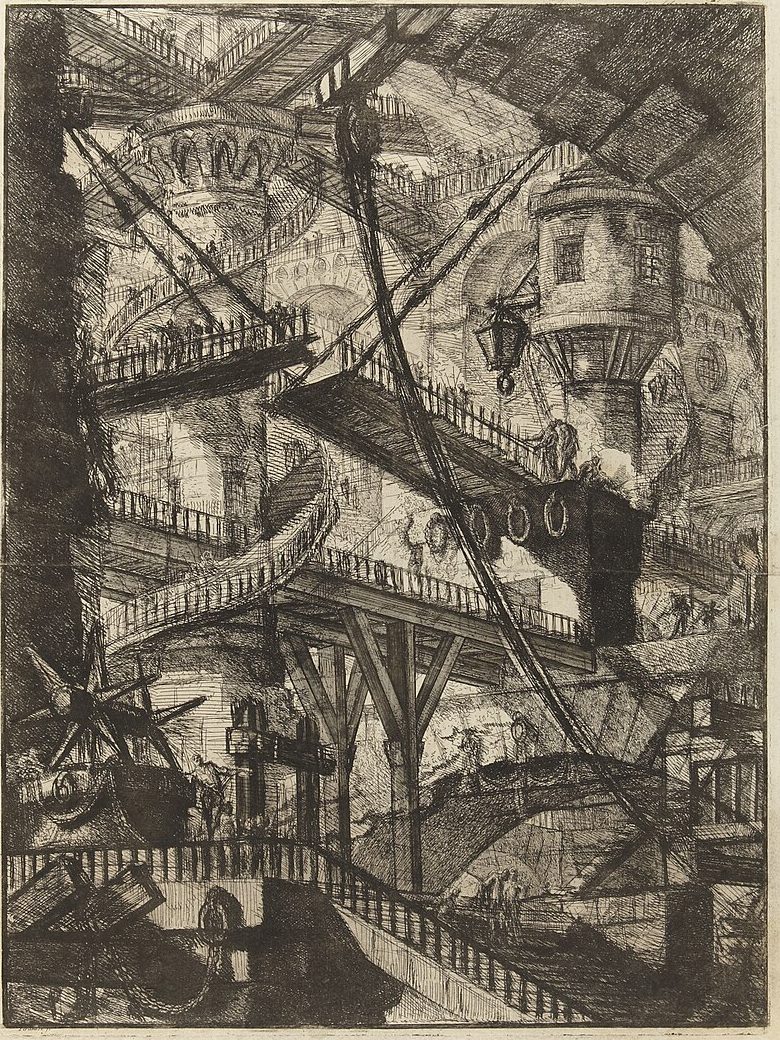
His paper "The Temporal Prison" (Analysis, 2011) turns an old worry on its head. Philosophers have long feared that a fixed future, or a past that causes everything we do, leaves no room for choice. The present has always looked like the safe place, where we act.
the threat time poses, or seems to pose, to human freedom Le Poidevin, "The Temporal Prison" (2011)
The argument
The paper sets out four claims, each of them plausible, which together form what it calls an inconsistent tetrad.
1. Conscious experiences act as conscious experiences. When I wince because of a pain, the pain itself makes a difference. It is not a mere side effect of the brain processes that do the real work.
2. Only what is present can act. The past is over and the future is not yet. If anything causes anything, it does so now.
3. The present is an instant. Any stretch of time, however short, has earlier and later parts, and only one of them is present at once.
4. Conscious experiences take time. An experience is never instantaneous. Le Poidevin draws on empirical evidence that a stimulus must last a certain minimum time before it reaches awareness at all. (See the felt present.)
Put the last three together and no conscious experience is ever wholly present. By claim 2, then, no experience can act, which contradicts claim 1. The conscious mind is trapped: never fully in the present, the only place where action happens. That is the temporal prison.
The paper ends with a section called "The way out of the prison". One of the four claims has to go, and each choice has its defenders, as the figure below shows. Other philosophers read the paper as a challenge to A-theories, which treat the present as objective. For a tenseless theorist like Le Poidevin, the most natural exit is to give up claim 2. If the present is only a matter of perspective, there is no reason why only present things can act.
Where he meets Deutsch
Deutsch has the claim-2 exit ready-made. For him the present is subjective: every moment is "now" to the observers at it, as every place is "here". Nothing in his account of causation mentions presentness. An event causes another when, across the variants of it in the multiverse, the second depends on the first. Experiences spread over time can act as well as anything else can.
Deutsch also writes that our consciousness exists at all our waking moments. It does not travel from one to the next, so it is never trapped in any of them. The prison only looks like a prison if we picture the mind squeezed through a moving gap called now.
Where they part
Snapshots and claim 4. Deutsch speaks of each snapshot of an observer as conscious. Snapshots, in pre-quantum physics, are instantaneous. Taken literally, that sits uneasily with claim 4, which says experiences take time. Deutsch could say that a single experience is spread across many snapshots. But then it is the pattern across them, not any one of them, that is conscious, and his own wording needs adjusting.
One world or many. Le Poidevin's tenseless theory is a view about a single history. Deutsch's account of cause and effect requires real variants of it.
Where the questions come from. Le Poidevin starts from experience, representation and agency, and asks what theory of time can make sense of them. Deutsch starts from physics, and explains experience as a feature of snapshots.
| Le Poidevin | Deutsch | |
|---|---|---|
| Does time flow? | No. The tenseless theory is true. | No. The idea is incoherent. |
| Is the present objective? | No; it is a matter of perspective. | No; now is like here. |
| Whom does the prison threaten? | Views with an objective, instantaneous present. | No one: there is no objective present to be trapped in. |
| Conscious experience | Takes time; never fits an instant. | Each snapshot of an observer is conscious. |
Further reading
- Robin Le Poidevin, "The Temporal Prison", Analysis 71 (2011), pp. 456–65.
- Robin Le Poidevin, The Images of Time: An Essay on Temporal Representation (Oxford, 2007).
- Robin Le Poidevin, Travels in Four Dimensions: The Enigmas of Space and Time (Oxford, 2003): a clear introduction.
- The Experience and Perception of Time, Stanford Encyclopedia of Philosophy, by Le Poidevin.