United States, born 1966
Sean Carroll
Time has a direction because the universe began in an extraordinarily orderly state. Everything we mean by past and future, from memory to cause and effect, rides on that one fact. And underneath it all, the world is a single quantum state that branches into many.
The view
Carroll is an American theoretical physicist who has worked at Caltech and Johns Hopkins, and a prolific writer for general readers. From Eternity to Here (2010) is his book on the arrow of time; Something Deeply Hidden (2019) defends the many-worlds interpretation of quantum mechanics; The Big Picture (2016) sets out the philosophy he calls poetic naturalism.
On time itself he is a B-theorist in spirit. The fundamental laws do not single out a present or a flow, and they treat past and future alike. What needs explaining is the arrow: why the world is so lopsided in time.
The argument
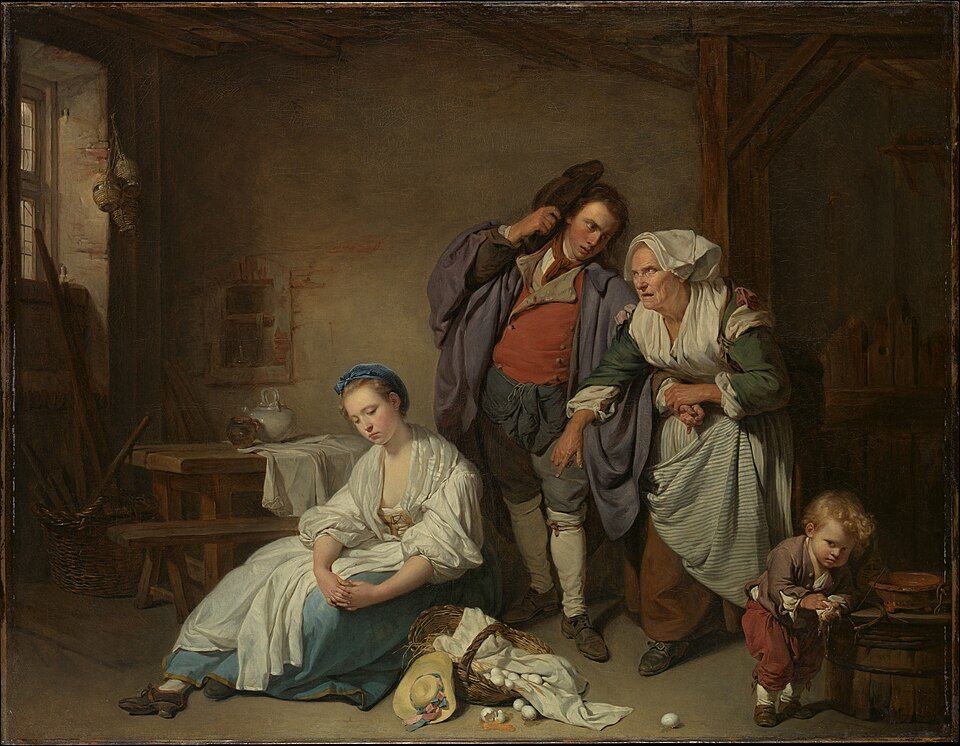
Every arrow is the entropy arrow. We remember the past and not the future; causes come before effects; eggs break and do not unbreak. Carroll argues that all of these are consequences of one fact: entropy increases. Memories, records and causes are only possible in a world whose entropy is lower in one direction.
So the question is why entropy was low. The laws do not explain it. They work equally well in both directions. The asymmetry must come from a boundary condition: the early universe was in a state of extraordinarily low entropy. Philosophers, following David Albert, call this the Past Hypothesis. Carroll treats it as perhaps the most important unexplained fact in cosmology.
The arrow of time is a relic of the universe's orderly beginning. after Carroll, From Eternity to Here (2010)
A proposal for explaining it. With Jennifer Chen, Carroll suggested in 2004 that our universe could be one of many born from a larger, nearly empty space-time, in which entropy can always increase. In their scenario entropy rises in both directions away from a point of lowest entropy, so that observers on either side would each take their own direction to be the future.
Causes are emergent. Cause and effect do not appear in the fundamental laws, which simply relate states at different times. Talk of causes is a useful higher-level description, valid because of the entropy gradient we live in. This is Carroll's poetic naturalism: many true stories at different levels, one underlying reality.
Where he meets Deutsch
On quantum mechanics, Carroll is Deutsch's closest ally on this site. Both defend the many-worlds interpretation and take its branching universes to be as real as our own. Carroll's case in Something Deeply Hidden runs on the same principle as Deutsch's: take the equations seriously and accept what they describe.
On time, they agree that nothing flows and that the arrow comes from the second law. Deutsch explains why causes precede effects by the rapid growth, in our part of the multiverse, in the number of distinct kinds of snapshot: what the second law becomes in multiverse terms. Carroll gives the same fact a cosmological source.
Where they part
What makes causation real? This is the most interesting difference. For Carroll, causes are an emergent way of talking, made possible by the entropy gradient. For Deutsch, causation is objective at the level of the multiverse: one event causes another when, across the variants that really exist, the second depends on the first. Causes do not need to be emergent, because the counterfactual variants are physically there.
How much does cosmology carry? Carroll's account of the arrow rests on an initial condition that he takes to need a cosmological explanation. Deutsch's chapter is less concerned with origins. It says that near the Big Bang the snapshots are not in any particular order at all, so asking what came "before" has no answer.
Snapshots or a wave function? Carroll tends to describe reality as a single quantum state evolving in a vast space of possibilities, with space and branching worlds emerging from it. Deutsch describes the same physics through snapshots and their relations, which brings the question of time to the surface. The disagreement is mostly about emphasis.
| Carroll | Deutsch | |
|---|---|---|
| Does time flow? | No, not in fundamental physics. | No. The idea is incoherent. |
| Where does the arrow come from? | The low-entropy early universe. | Growing variety of snapshots: the second law. |
| Is causation real? | Emergent, a higher-level description. | Objective, defined across real variants. |
| Quantum reality | Many worlds. | Many worlds: the multiverse. |
Further reading
- Sean Carroll, From Eternity to Here (New York, 2010).
- Sean Carroll, Something Deeply Hidden (New York, 2019).
- Sean Carroll and Jennifer Chen, "Spontaneous Inflation and the Origin of the Arrow of Time" (2004).
- David Z. Albert, Time and Chance (Cambridge, Mass., 2000), on the Past Hypothesis.