Sydney and Cambridge, born 1953
Huw Price
To understand time we must stop looking at it from inside. Seen from nowhen, the laws have no favourite direction, and many of the asymmetries we take for granted, including that of cause and effect, turn out to be facts about us.
The view
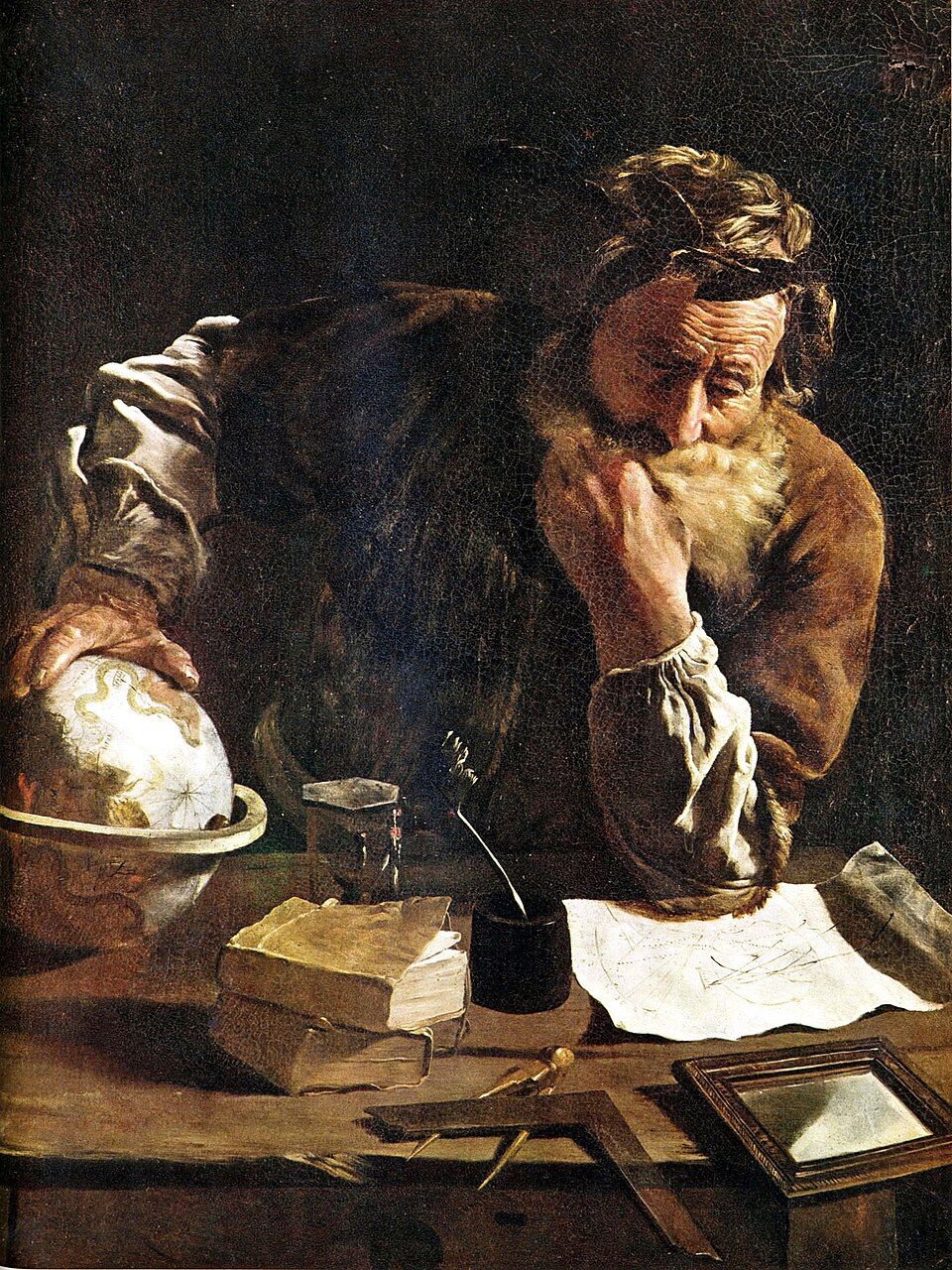
Price is an Australian philosopher who taught at the University of Sydney and then held the Bertrand Russell chair at Cambridge. His book Time's Arrow and Archimedes' Point (1996) asks what the world looks like from a standpoint that does not privilege either direction of time: the "view from nowhen".
From there, the fundamental laws look time-symmetric. The striking asymmetries of the world, that entropy rises, that radiation spreads out from sources rather than converging on them, that we can affect the future but not the past, need explaining. Price's charge is that physicists and philosophers keep explaining them by smuggling the asymmetry in.
The argument
The double standard. We find it natural to explain later states by earlier ones, and to accept improbable earlier states without comment. A symmetric argument that works towards the future must work towards the past. Statistical reasoning shows that entropy should rise towards the future; the same reasoning, run the other way, says it should have been higher in the past. Since it was not, the real puzzle is not why entropy increases. It is why it was ever so low.
Ripples on a pond. Drop a stone and circular waves spread out. The reverse, waves converging from the edge onto a point, is allowed by the same laws, as Karl Popper pointed out in the 1950s. We never see it because the edges of ponds are never arranged to send in perfectly coordinated waves. The asymmetry is in the boundary conditions, not the laws.
Look at time from nowhen, and its arrow is in the boundaries, not the laws. after Price, Time's Arrow and Archimedes' Point (1996)
Causation is perspectival. With Peter Menzies, Price argued that our concept of causation comes from our perspective as agents: a cause is something we could manipulate to bring about an effect. Since agents like us are themselves products of the entropy gradient, the direction of causation reflects our place in time, not a feature of the world seen from nowhen.
Perhaps the future affects the past. If causal asymmetry is perspectival, there is room for "advanced action": influences on the past from the future, at the microscopic scale where our perspective gives no guidance. Price has argued that such retrocausality could explain the correlations in Bell's experiments without action at a distance.
Where he meets Deutsch
Deutsch's chapter is written from something very like the view from nowhen. He insists that there is no framework of time outside physical reality, and he imagines looking at spacetime from outside to show that its snapshots carry their own order. He also stresses that determinism in both classical and quantum physics works backwards as well as forwards.
Most strikingly, Deutsch's definition of causation does not require causes to precede their effects. He says that in exotic situations, near the Big Bang or inside black holes, they may not. In everyday life causes come first because, in our part of the multiverse, the number of distinct kinds of snapshot grows with time. That is Price's lesson: the direction of causation follows a local asymmetry in the world, not a law.
Where they part
Is causation objective? For Price, causal direction is projected from our perspective as agents. For Deutsch, causation is an objective feature of the multiverse: one event causes another when, among the variants that really exist, the second depends on the first. The variants are there whether or not any agent considers them.
What to do about Bell. Price looks to retrocausality to make quantum mechanics local in a single world. Deutsch holds that the multiverse already gives a local account of quantum phenomena, with no need for influences running backwards.
Where the asymmetry lives. Price locates it in boundary conditions on a single spacetime. Deutsch puts it in the structure of the multiverse, in how groups of snapshots determine one another: one group of identical snapshots fixes a larger, more varied group, but not the other way round.
| Price | Deutsch | |
|---|---|---|
| Does time flow? | No. View it from nowhen. | No. The idea is incoherent. |
| Where does the arrow come from? | Boundary conditions: the low-entropy past. | Growing variety of snapshots in our region. |
| Must causes come first? | No; causal direction is perspectival. | No, though in our vicinity they do. |
| Quantum reality | Perhaps one world, with retrocausality. | A multiverse, local without retrocausality. |
Further reading
- Huw Price, Time's Arrow and Archimedes' Point (New York, 1996).
- Peter Menzies and Huw Price, "Causation as a Secondary Quality", British Journal for the Philosophy of Science (1993).
- Huw Price, "Does Time-Symmetry Imply Retrocausality?", Studies in History and Philosophy of Modern Physics (2012).
- Thermodynamic Asymmetry in Time, Stanford Encyclopedia of Philosophy.