Ephesus, c. 535–475 BC
Heraclitus
The world is not a collection of things but a set of processes, held in balance by a hidden measure. Nothing stays still, and that is why anything stays the same.
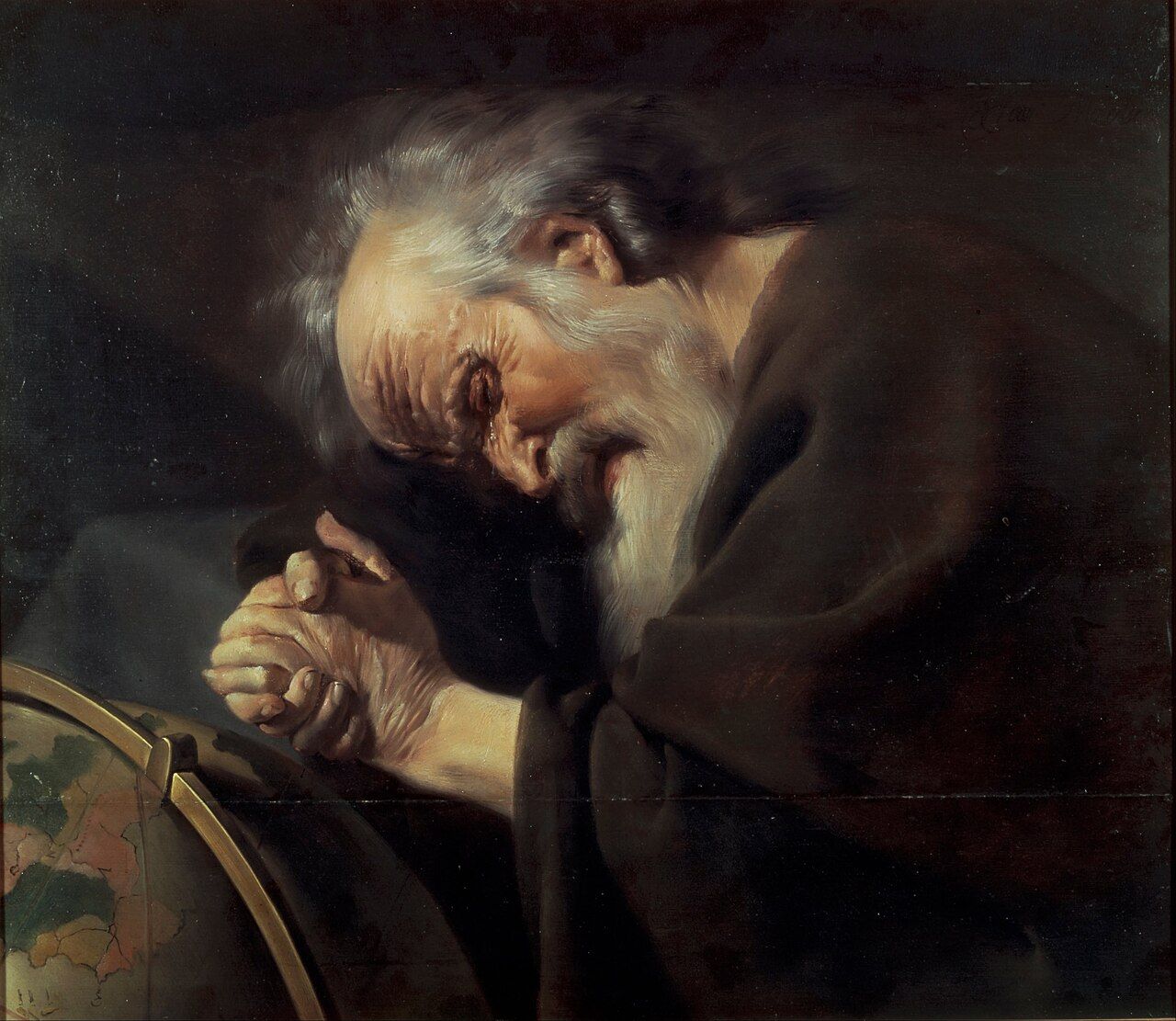
The view
Heraclitus wrote one book, which is lost. What survives is around a hundred and thirty fragments, quoted by later writers who often disliked him, and their compression earned him the nickname "the obscure". They are numbered by the system Hermann Diels and Walther Kranz set up in 1903, so B12 means fragment 12. The translations here are our own.
Three ideas run through them.
Everything is in process. The slogan "everything flows" comes from later summaries rather than from Heraclitus himself, but it captures him. His most reliable river fragment says more than the slogan:
On those who step into the same rivers, different and different waters flow. B12
The river stays the same river because its waters keep changing. Stop the flow and you have a lake, or a ditch. Identity is a pattern sustained through change, not a lump that resists it.
Opposites are one. The road up and the road down are the same road (B60). Living and dead, waking and sleeping, young and old turn into one another (B88). Day and night are two phases of one cycle. Each opposite is defined by its passage into the other.
A hidden measure governs it all. The world-order, he says, was made by no god or man: it always was, is and will be an ever-living fire, kindled in measures and quenched in measures (B30). He calls the governing measure the logos, the account or proportion behind things, and warns that it is easy to miss: nature loves to hide (B123).
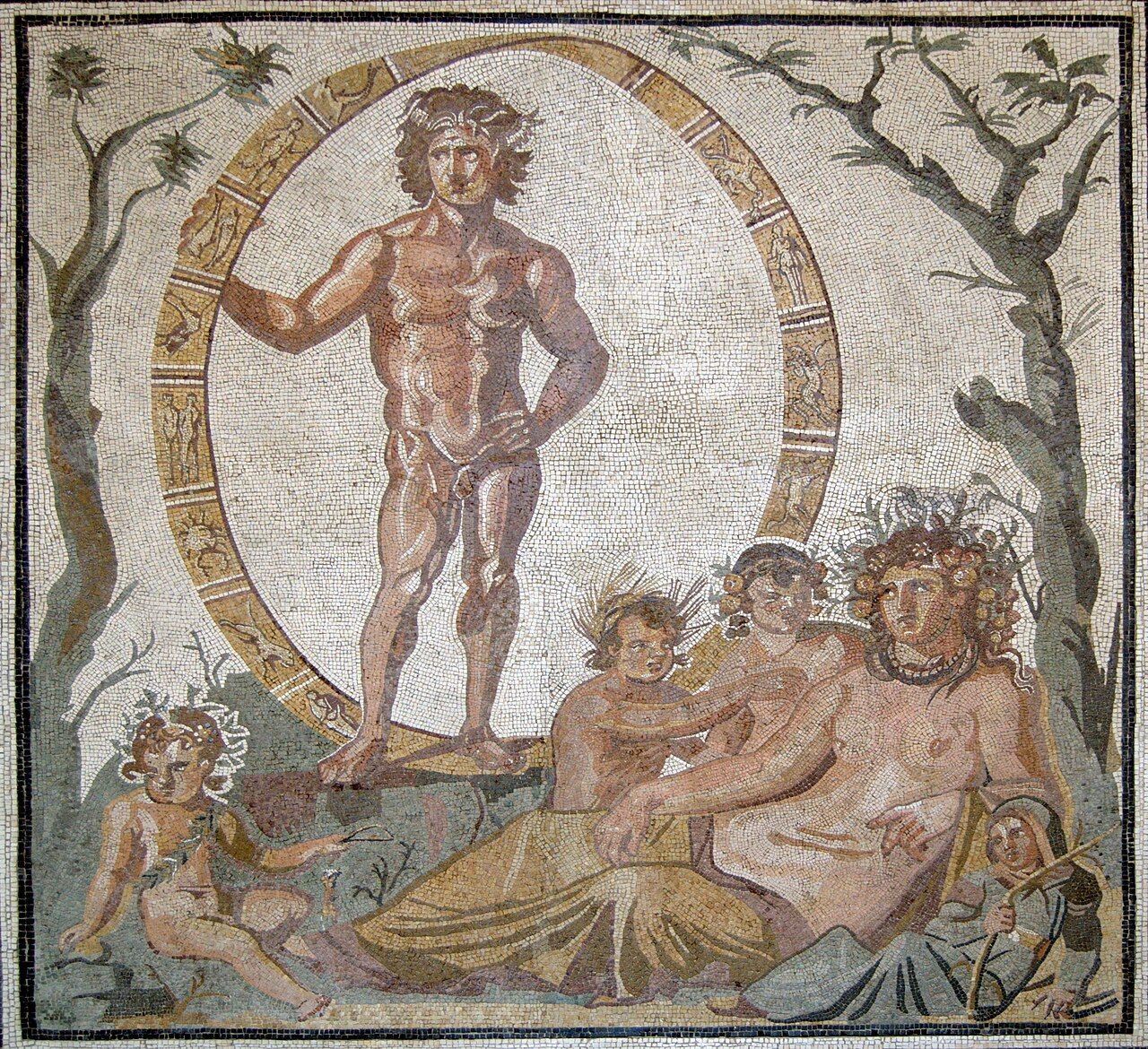
Where he meets Deutsch
Read the river fragment again with figure 11.2 in mind. A river is a sequence of different waters, each moment's water distinct from the last, yet we rightly call it one river. Deutsch's rotating arrow is the same idea: one object, many different snapshots, the object being the pattern that runs through them. Heraclitus saw twenty-five centuries early that persistence is a relation between different states, not a refusal to change.
The logos fits too. For Deutsch, what holds the snapshots of a spacetime together is not an outside clock but the laws of physics, the "glue" that fixes each snapshot's relation to the others. A hidden measure, not visible in any single moment, that governs how moments relate: that is close to what Heraclitus meant. Nature loves to hide, and the multiverse hides most of all.
Where they part
Heraclitus makes flow fundamental. For him the process is the reality and the momentary states are abstractions from it; ask what the river is "at an instant" and you have already missed it. Deutsch reverses the order. The snapshots are what exist, and the flow is a misreading of the differences between them. Press the second button above and the river becomes a row of still frames: the banks match, the waters differ, and nothing at all is flowing.
His opposites part company with Deutsch too. Heraclitus treats day and night, waking and sleeping, as a cycle in which each turns into the other, with time as the wheel they ride on. Deutsch has no wheel and no turning. There are snapshots in which it is day and snapshots in which it is night, related by physical law. The "turning into" is our way of narrating the relation.
| Heraclitus | Deutsch | |
|---|---|---|
| Does time flow? | Yes. Flow is the deepest fact about the world. | No. The idea is incoherent. |
| Is change real? | Change is all there is. | Yes, as differences between snapshots. |
| What makes a thing one thing? | A pattern kept up through constant change. | A chain of snapshots linked by physical law. |
| What governs change? | The logos, a hidden measure. | The laws of quantum physics. |
Further reading
- G. S. Kirk, J. E. Raven and M. Schofield, The Presocratic Philosophers, 2nd edn (Cambridge, 1983): Greek text, translation and commentary.
- Charles H. Kahn, The Art and Thought of Heraclitus (Cambridge, 1979): the fragments read as a deliberate literary whole.
- Jo Marchant, In Search of Now: The Science of the Present Moment (New York, 2026), which opens with Heraclitus against Parmenides.
- Heraclitus, Stanford Encyclopedia of Philosophy.